
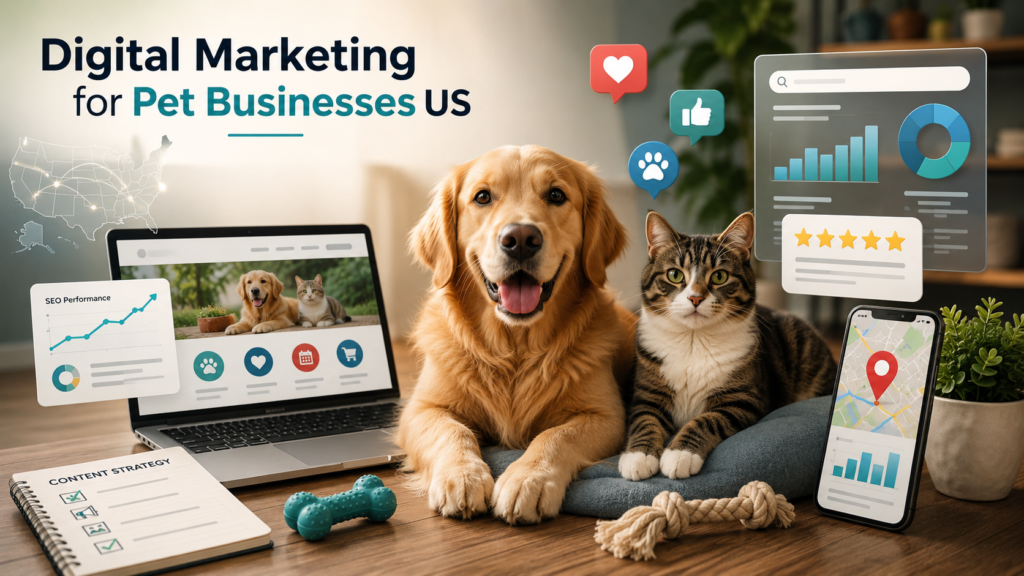
Pet businesses operate in one of the most emotionally driven markets in the United States. Pet parents do not simply purchase products or services; they look for businesses they can trust with the wellbeing, comfort, and happiness of their animals. Whether the business offers grooming, veterinary support, boarding, training, daycare, pet photography, or specialty products, a strong online presence can directly influence whether a potential customer chooses one provider over another.
A successful marketing strategy therefore needs to do more than generate website traffic. It should build credibility, reach customers at the right moment, communicate expertise, and make it easy for pet owners to take action. Here are the most effective strategies pet businesses can use to strengthen their digital presence and turn online attention into long-term customer relationships.
Why Digital Marketing Matters for Pet Businesses
Pet owners increasingly research businesses online before making a decision. They may compare reviews, explore services, examine pricing, check photographs, visit social media profiles, and look for evidence that a business understands animals and their specific needs.
This makes digital marketing for pet businesses US audiences especially important for local providers. A grooming salon, dog daycare, trainer, or pet clinic may have excellent services, but customers cannot choose the business if they cannot find it online.
The strongest approach combines visibility with trust. Helpful educational content can answer questions before a customer contacts the business, while reviews and testimonials provide social proof. A well-structured website can then turn that interest into bookings, inquiries, purchases, or phone calls.
Build a Website Designed Around Pet Owners
A professional website should function as the central hub of a pet business’s marketing efforts. It should immediately communicate what the company offers, who it serves, where it operates, and why customers should trust it.
The most important service information should be easy to find. Instead of placing every service on one generic page, create dedicated pages for offerings such as dog grooming, cat grooming, puppy training, boarding, daycare, pet sitting, or specialty products. This gives visitors clearer information while also creating opportunities to target specific search queries.
Mobile usability is equally important. Many pet owners search for services from their phones when they need help quickly. Pages should load efficiently, contact information should be visible, and booking or inquiry forms should require minimal effort.
Strong visuals also matter. High-quality photographs of facilities, staff, products, and happy pets can make a business feel more approachable. For service-based companies, showing the environment where pets will spend time can reduce anxiety and strengthen confidence.
Make Search Visibility a Long-Term Priority
Search engines remain one of the most valuable ways for pet businesses to reach people who are actively looking for a solution. The objective is not simply to rank for broad phrases such as “pet services.” Businesses should identify the specific questions, services, locations, and problems their ideal customers search for.
For example, a dog daycare can create useful content around topics such as how to prepare a dog for daycare, signs that a dog may benefit from socialization, or how to choose a safe daycare facility. A groomer could publish guidance about coat maintenance, puppy grooming schedules, and handling anxious pets.
This is where SEO Services can provide strategic value. Effective optimization involves technical website improvements, useful content, keyword research, internal linking, page structure, and authority development rather than simply inserting keywords into articles.
Strengthen Local Visibility
For many pet businesses, customers are concentrated within a relatively small geographic area. A pet owner is unlikely to drive several hours for routine grooming or daycare when a reputable option is available nearby. This makes Local SEO particularly valuable.
A business should maintain accurate information across its Google Business Profile and other relevant online directories. Its name, address, phone number, operating hours, service categories, website, and booking information should remain consistent.
Reviews are another major component of local visibility. Businesses should encourage genuine customers to share their experiences after receiving a service. Rather than asking only for positive reviews, businesses should invite honest feedback and respond professionally to both praise and concerns.
Location-specific website content can also improve relevance. Dedicated pages for neighborhoods, cities, or service areas can help businesses communicate where they operate while giving prospective customers useful local information.
Use Content to Demonstrate Expertise
Content marketing can help pet businesses become trusted sources of information instead of appearing only when someone is ready to buy.
The most effective content addresses real concerns. Pet owners may want to know how often a dog should be groomed, what to look for in a boarding facility, how to introduce a puppy to daycare, how to reduce separation anxiety, or what questions to ask a pet sitter.
Instead of producing large quantities of generic articles, businesses should focus on depth and usefulness. A well-researched guide that answers an important customer question can continue attracting visitors long after publication.
Content can also support other marketing channels. A detailed article can become a short social media post, an email newsletter topic, a video script, or an infographic. This allows one strong idea to generate multiple touchpoints without repeatedly creating content from scratch.
Explore AI SEO Without Losing the Human Element
Artificial intelligence can make marketing workflows faster, particularly when businesses need help researching topics, organizing content ideas, identifying gaps, or analyzing large amounts of information. AI SEO can support these processes, but it should not replace human expertise.
Pet-related content requires accuracy and responsibility because readers may make decisions affecting an animal’s health, safety, or wellbeing. AI-generated information should therefore be reviewed carefully by knowledgeable professionals before publication.
The best use of AI is to improve efficiency while preserving originality and credibility. Businesses can use technology to identify questions customers frequently ask, structure content, or develop initial ideas, then add firsthand knowledge, expert perspectives, examples, and practical recommendations.
This combination produces content that feels useful rather than mass-produced.
Turn Social Media Into a Trust-Building Channel
Pet businesses have a natural advantage on social media because animals are highly visual and emotionally engaging. However, successful social media marketing requires more than posting cute photographs.
Businesses can showcase behind-the-scenes activities, introduce team members, demonstrate grooming transformations, share training tips, answer common customer questions, and highlight customer stories with permission. Short videos can be especially effective for explaining services or showing what happens during a pet’s visit.
Consistency is more valuable than trying to maintain a presence on every platform. A business should identify where its customers are most active and develop content that suits that platform.
Social media should also encourage conversation. Responding to comments and questions makes a business appear accessible, while direct interaction can help turn casual followers into customers.
Use Reviews, Email, and Retention Marketing
Acquiring a new customer is only part of the challenge. Pet businesses can build substantial long-term value by encouraging existing customers to return.
Email marketing is useful for reminders, educational information, seasonal promotions, new services, and personalized recommendations. A grooming business, for example, can remind customers when another appointment may be appropriate. A daycare or boarding company can communicate upcoming holiday booking periods.
Customer retention should feel helpful rather than intrusive. Personalized communication based on previous purchases or services can make customers feel understood.
Reviews should also be incorporated throughout the customer journey. Testimonials can appear on service pages, landing pages, and relevant promotional materials, giving new visitors evidence that real customers have had positive experiences.
Measure What Actually Produces Business Results
Marketing performance should not be judged solely by follower counts or website traffic. Pet businesses need to understand which activities contribute to meaningful outcomes.
Important metrics can include organic search traffic, calls, booking requests, completed appointments, contact-form submissions, online sales, repeat customers, review growth, and conversion rates.
Businesses should also examine which pages generate inquiries and which marketing channels bring customers who return repeatedly. This information makes it easier to invest in strategies that create genuine business value.
For example, a blog post that attracts thousands of visitors but produces no inquiries may be less valuable than a service page that receives modest traffic but generates regular bookings.
Build a Sustainable Strategy for Long-Term Growth
The most effective digital marketing for pet businesses US companies can adopt is not a single tactic or short-term campaign. It is an integrated system in which the website, search visibility, educational content, social media, reviews, email communication, and customer experience support one another.
Businesses should begin with the fundamentals: a trustworthy website, accurate local information, strong service pages, useful content, and an effective review process. Once those foundations are established, they can expand into advanced content strategies, automation, paid campaigns, video, and data-driven optimization.
The goal is simple: be visible when pet owners need help, provide valuable information before they buy, make the decision process easy, and continue delivering reasons for customers to return.
Pet owners have many choices, but businesses that consistently demonstrate expertise, reliability, compassion, and convenience can build a stronger position in a competitive market. With a thoughtful strategy and continuous improvement, online marketing becomes more than a way to attract clicks—it becomes a powerful engine for sustainable growth.